Category Archives: Architectural Education

Revisiting Hans Hollein Schullin 1

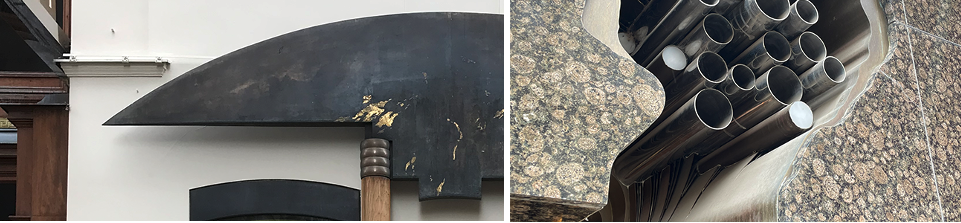
Revisiting Hans Hollein Schullin 1. During a recent trip to Vienna, Austria, I rekindled my connection with two iconic retail projects by Austrian architect Hans Hollein (1934-2014; 1985 Pritzker Prize laureate). I have always admired Hollein’s talent and deeply Viennese approach to the design of these early stores; projects which rapidly became signature interventions in the city center of Vienna in the mid 1970s and gave him the international notoriety that would carry throughout his entire life.

Continue reading Revisiting Hans Hollein Schullin 1

Metropolenhaus Markgrafenstrasse: A precedent analysis

detail of Markgrafenstrasse facade

Metropolenhaus Markgrafenstrasse: A precedent analysis. Just shy of four decades teaching architecture, I proudly continue to learn about my field through in-depth analysis of case studies. Along with precedent studies, this research method is for me a moment of intense engagement that is often triggered by an inkling of interest through a chance encounter.

Continue reading Metropolenhaus Markgrafenstrasse: A precedent analysis

Is space for humans still important in architecture?

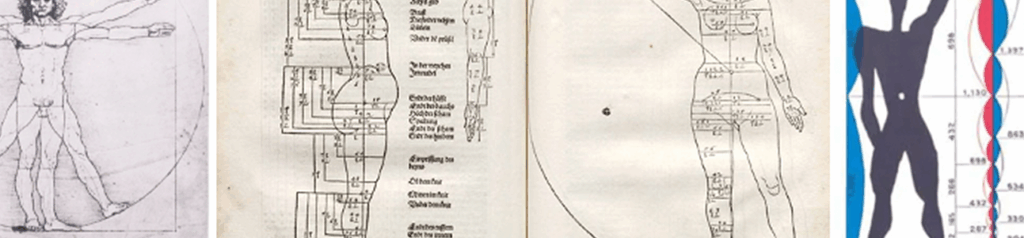
detail of human propertions

Is space for humans still important in architecture? I was educated by a second generation of faculty who praised the work of modernist architects such as Alvar Aalto, Le Corbusier, Louis I. Kahn, and Mies van der Rohe—and to a certain extent Frank Lloyd Wright as the American proto-modern architect par excellence.

Continue reading Is space for humans still important in architecture?

Structure and architecture

Comparison between Honda and human structure

Structure and architecture. In any architecture school, structure classes are required by NAAB for accreditation. While talented faculty impart knowledge to students, it is my experience with several institutions that most of the structure classes focus on understanding key materials properties and ways to calculate structure. Class sessions are about imparting knowledge to make designs stable and safe, but rarely consider how architects think spatially about structure.

Continue reading Structure and architecture

Hubert Robert copying paintings at the Louvre

detail of the 1796 painting by Hubert Robert

Hubert Robert copying paintings at the Louvre. I remember the day when I was a student of architecture, and was asked to deliberately copy a drawing (e.g. plan and section). At first, the faculty’s request took me off guard as I thought the act of creating came solely from an inner calling—my genius, my intuition, and my talent!

Continue reading Hubert Robert copying paintings at the Louvre

Sketching as reflection-in-action

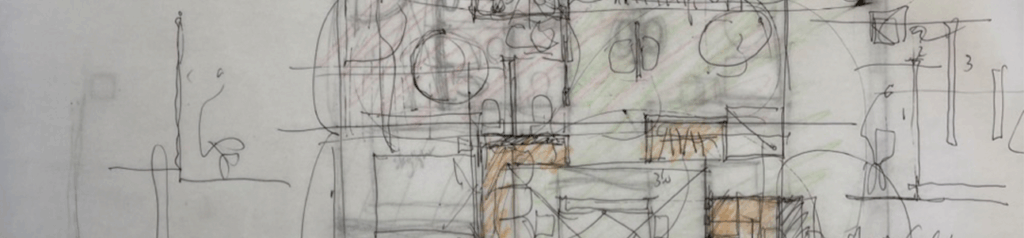
Sketching as reflection-in-action. I have had ample opportunities in previous blogs to write about teaching as a balance between theory and practice, which I do by merging various pedagogical strategies from my European and American experiences in order to trigger intellectual and professional curiosity among students.

Continue reading Sketching as reflection-in-action

Cinematographic traveling in architecture

Detail of room near window and balcony

Cinematographic traveling in architecture. With the importance of translating ideas into space, thinking spatially in architecture remains a significant stumbling block for students studying architecture; especially for university juniors who are for the first time learning about fundamentals of space making.

Continue reading Cinematographic traveling in architecture