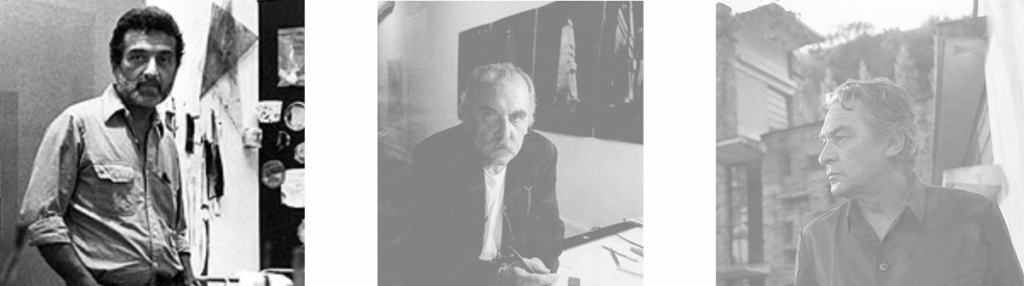
Robert Slutzky. In my second year at the EPFL, the idea of learning architecture through precedents filtered from the appreciation of vernacular buildings to an immersion with visiting guest professors.
Continue reading Robert SlutzkyRobert Slutzky. In my second year at the EPFL, the idea of learning architecture through precedents filtered from the appreciation of vernacular buildings to an immersion with visiting guest professors.
Continue reading Robert Slutzky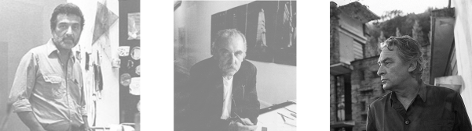
Leonardo Ricci. This blog concludes my thoughts on mentors, the three who have made me who I am as an architect and educator. Following blogs on two of my professors, Robert Slutzky at the EPFL and Raimund Abraham during my year at The Cooper Union (Cooper), I want conclude with Leonardo Ricci who I met as a colleague at the University of Kentucky.
Continue reading Leonardo Ricci
Student critiques in architecture. Reflecting on my life as an educator, I perceive three important phases in the evolution of my teaching methods, and how, retrospectively, they have mirrored significant shifts in how students learn. As an introduction, let’s delve into the three phases.
Continue reading Student critiques in architecture
Leonardo Ricci: how to project in architecture. Leonardo Ricci: how to project in architecture.I have written many blogs to assist students in furthering their intellectual curiosity. These blogs elucidate content that addresses a number of issues they encounter during regular design studio time.
Continue reading Leonardo Ricci: how to project in architecture
Carlo Scarpa, Venice entrance pavilion. Over the years, I have noticed that small, unobtrusive interventions are no longer discussed. Many of the intellectual riddles—especially in academia—now focus on the plethora of new, unexpected, bizarre, and even the fashionably ugly. If this is true, it is sad that what is now understood as architecture often no longer relates to how, in particular, small works of excellence contribute to the built environment.
Continue reading Carlo Scarpa, Venice entrance pavilion
How to become an architect? As Covid-19 is well past, students and their parents have resumed visiting university campuses. To my delight, students are showing a growing interest in architecture programs.
Continue reading How to become an architect?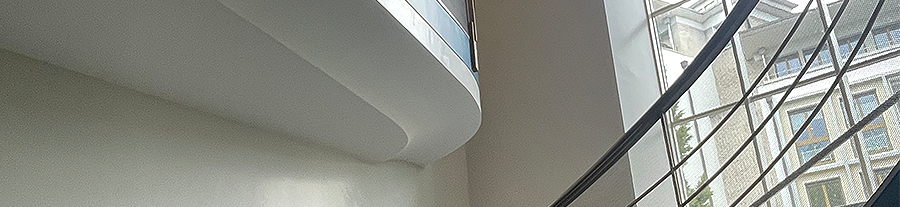
Jacques Gubler: what does an elegant solution mean in architecture? During a visit to Basel, Switzerland with a colleague of mine and architecture students, I rekindled my relationship with Jacques Gubler, an esteemed history and theory faculty who taught at the EPFL when I was a student there. It was a wonderful fully-packed afternoon, with visits to key architecture projects, a critique of the new annex designed by Christ & Gantenbein, followed by a tour of the Kunstmuseum Basel (Image 1).
Continue reading Jacques Gubler: what does an elegant solution mean in architecture?
Prague: a lesson in stairs (Josef Plečnik). There has always been for me delight in discovering in-situ urban places when studying famous, or not so famous, and, even better, relatively unknown architects. I will admit that I favor anonymous architects, as many of them have created stupendous works in silence; away from the unnecessary disturbance surrounding today’s star architects.
Continue reading Prague: a lesson in stairs (Josef Plecnik)
Some thoughts on cooking from an architect’s perspective. Ever since I was a kid, I have loved hanging around the kitchen and watching dishes being prepared. Dabbling at first by helping my mom bake brownies and later a kid’s generic pasta dish with butter and parmesan—which I still love when in need of a quick carb rush—cooking evolved to become a lifelong hobby, and eventually a commitment that is practiced daily.
Continue reading Some thoughts on cooking from an architect’s perspective
David Chipperfield, Am Kupfergraben, Berlin. During a recent trip to Berlin, Germany, I made a point to revisit the Gallerie Am Kupfergraben (Berlin Mitte district), completed between 2003-2007 by British architect Sir David Chipperfield. This was not the first time that I had paid a visit to the building—both for the inside and outside architectural qualities. Disappointingly, the Gallery was closed the day of my visit this time.
Continue reading David Chipperfield, Am Kupfergraben, Berlin