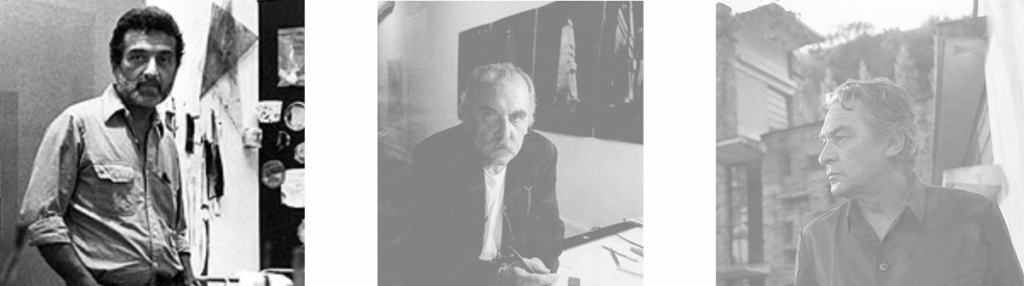
Robert Slutzky. In my second year at the EPFL, the idea of learning architecture through precedents filtered from the appreciation of vernacular buildings to an immersion with visiting guest professors.
New opportunities were cherished, and needless to say we were competitive in securing our first choice of professor for each trimester. The tradition that students could choose a visiting instructor—initiated by Professor Pierre von Meiss, was unique at that time, and we all knew the privilege that had been offered to us. Under this system, year after year we were introduced to the who is who in the architectural world. I remember at that time notable guest professors such as Colquhoun, Frampton, Gregotti, Huet, Moneo, Nicolin, Siza, and, of course many of the protagonists of the Ticinese Tendenza represented by key architects such as Botta, Galfetti, and Snozzi, who all contributed to create a momentum within the Department of Architecture at the EPFL.
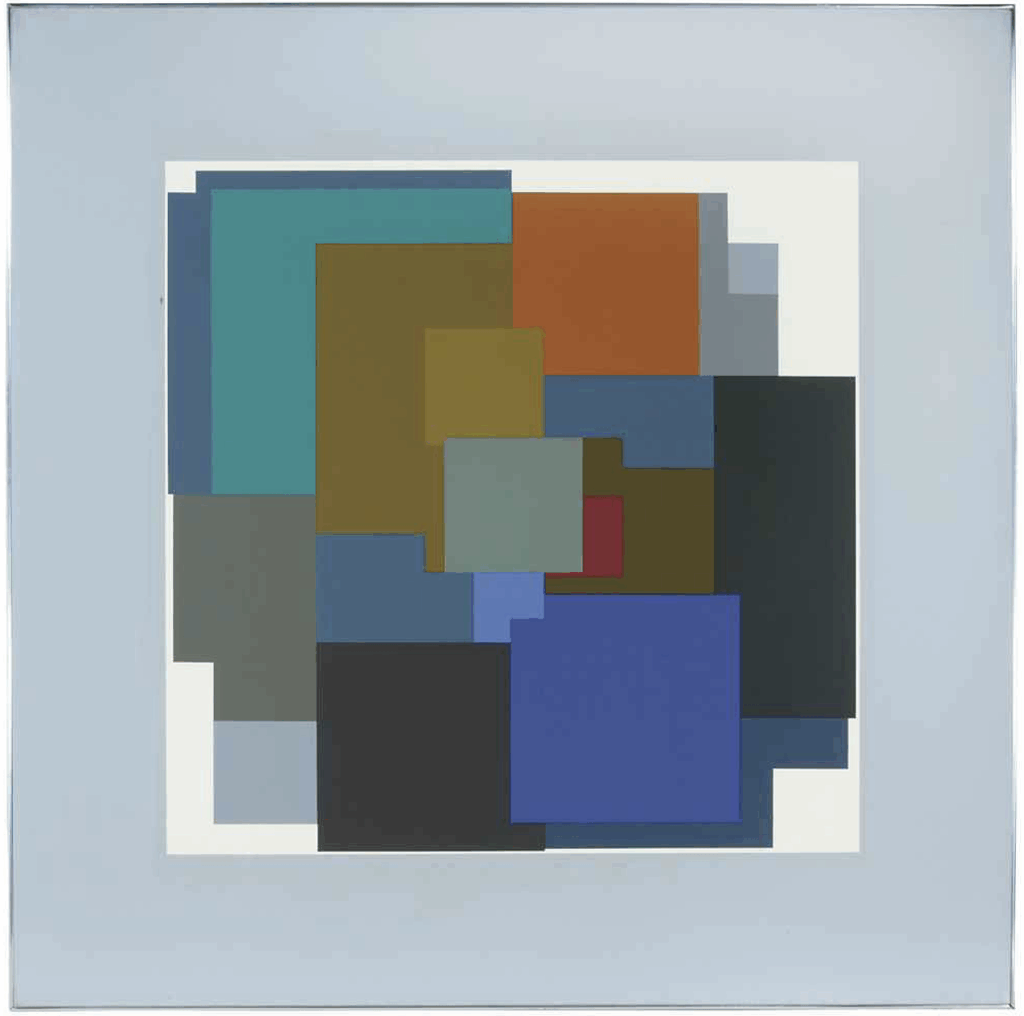
One of them was Robert (Bob) Slutzky (1929-2005) who was returning to the EPFL for a second visit from his permanent teaching position at The Cooper Union. I was fortunate to have him as my design studio professor. At that time, I had not yet read the seminal text Transparency: Literal and Phenomenal (1955) that Colin Rowe and Bob had co-authored, but the idea of a painter teaching architecture was provocative—somewhat disputed by the old guard who retreated behind a common discourse—and was key to my decision to study under his guidance.
Bob was charismatic in a very discrete and reserved manner, and had a gentleness in his voice as he expressed the few and precise thoughts that amazed us students. Never polemical or ideologic in his outreach, he was nevertheless always ready to share his outlook on any subject that was central to the conversation at hand.
We became captivated by his extraordinary ability to bridge cubism as a spatial concept with architecture as cubism while exhibiting an instinctive and a profound intellectual grasp on many subjects. But most important was Bob’s ability to communicate to students his passion for learning, and I am so fortunate that he impacted me with the desire to become a lifelong learner.
I remember his cadence, and how he walked from desk to desk almost like a ballet dancer floating in space. Dressed in jeans, casual shirt, and often sneakers, Bob represented a New York demeanor and personified what we believed a world-renowned artist to be. Desk crits were magic. They were disciplined like those that I would later come to experience at Cooper Union under Raimund Abraham and John Hejduk.
Every week, we were asked to push the boundaries of space making, but never for the sake of abstract forms and shapes, always with an underlying understanding that creating space was our art form par excellence. This compositional frame was not about style, as Bob’s unconditional talent was to teach us to think of the body in space, which had direct implication as thinking of the body in architecture.
Bob was a poet, and invited us to see how visual allegories could become a generator and give life to functional real-world requirements. I remember during a mid-semester review Bob saying, “Henri, your project smells like a rotten fish; when are you going to start dealing with architecture?” Humiliated by his remarks, I have never forgotten what was at that time an insurmountable challenge; to transform poetry into my art form, namely architecture.
For all of us, Bob was primarily a painter. Influenced by Joseph Alberts who was a student at the Bauhaus in the 1920s, Bob was equally an authority on modern architecture. Inside and outside of the classroom, Bob shared with us the importance of a true discourse on architecture, one that carried complex meaning for our responsibility to seek an organization of spatial narratives in relationship to human occupation.
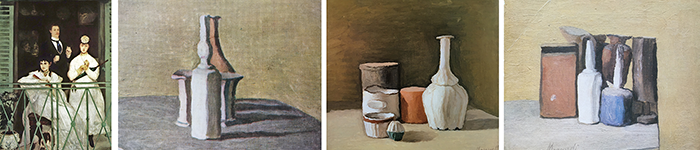
His appreciation for human consideration was echoed in his beautiful metaphors on Georgio Morandi’s still lives, where he compared the arrangement of bottles to Italian family portraits. Retrospectively, I came to see his art in a similar manner, and know that my true appreciation for painting was a result of Bob’s influence.
Epilogue
Years later, it was Bob who introduced me to The Institute for Architecture and Urban Studies (I.A.U.S), which I attended followed a year later by studies at The Cooper Union. In both instances, it was wonderful to rekindle with Bob and get bursts of energy through our discussions about my projects.
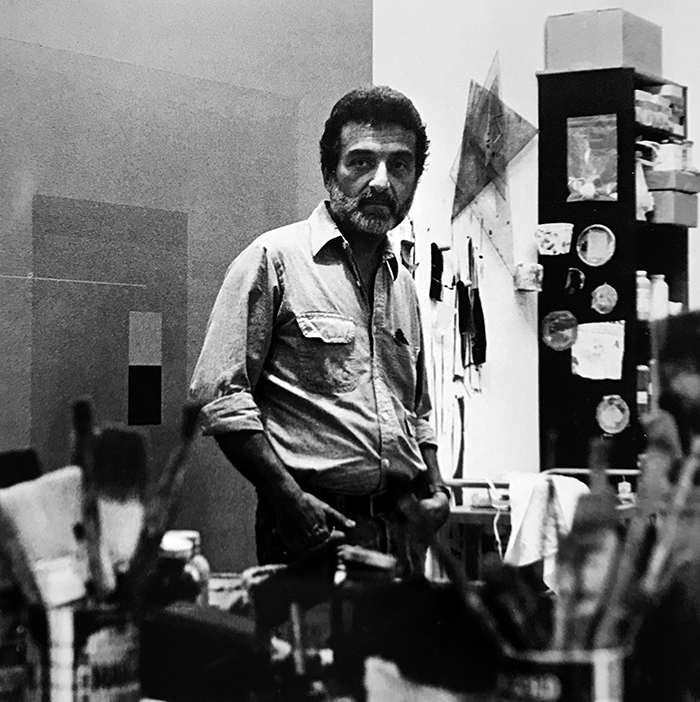
Having such admiration and respect for a mentor is one thing, but I never genuinely understood at the time that what Bob wanted from his students was that upon graduation they engage in the world, practice, and translate his teaching into tangible artifacts.
When I had first solo clients, and upon completion of the apartment renovation, with some trepidation I invited Bob to give me a critique. Not only was this my first solo work since graduation, there were other challenges I had faced: the project was located in New York City, a place with very particular construction and building techniques; the securing of a contractor and understanding of their relationship with the unions; the development of an American bid set; the filing of permits with various city agencies, to name but a few. All was further complicated by my starting a teaching stint at the University of Kentucky, 700 miles away and commenting between both cities during the summer to see the work completed.
What I remember from Bob’s visit was that the mentor-student relationship turned into a friendship because of his confidence that I was able to translate his teachings into my own language as an architect. My previous words of admiration were now transformed in my art form.
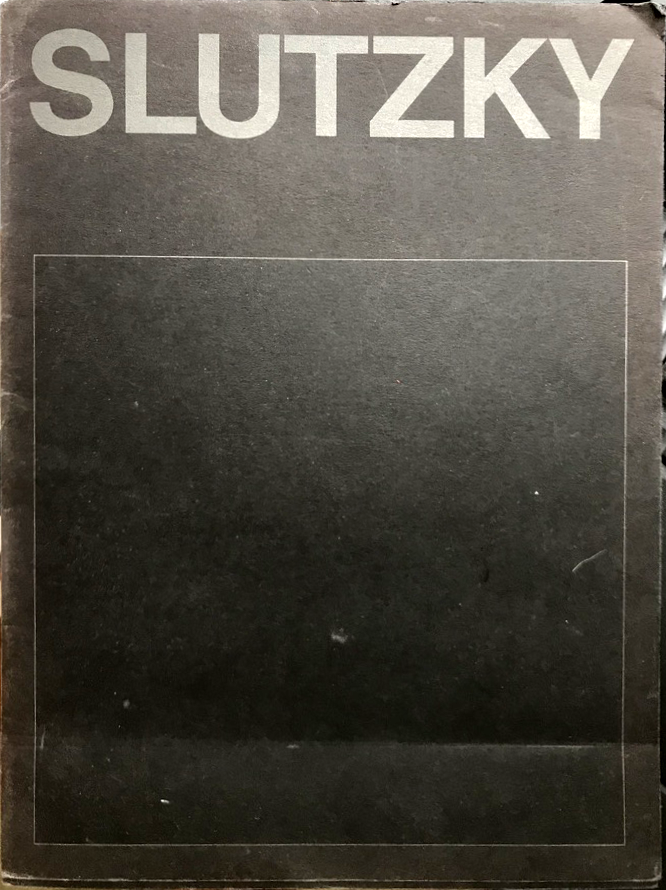
Publication on the work of Robert Slutzky (author’s collection)


Other blogs of interest
Hubert Robert copying paintings at the Louvre
Still lifes by Ben Nicholson
Hubert Robert: Painting as a source of knowledge
Simone Martini: three principles of settlement
Le Baron Tavernier: a cafe terrace in the middle of the Lavaux vineyards, Switzerland
Architectural Education: Robert Slutzky. Part 2
Edward Hopper
Architectural Education: valuing your mentors. Part 1
Netton Bosson, Gruyere, Switzerland