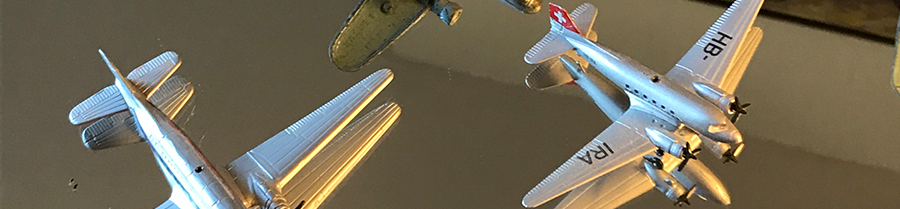
Miniature diecast airplanes. When rekindling memories of childhood, one might have in mind what were considered boy’s toys versus girl’s toys. This blue versus pink connotation was ever present when I grew up. Marketing data and research had much to say when inflecting distinctions. For example, “girls” toys were seen as more aesthetic, domestic and nurturing, while “boys” toys often underscored action-oriented play and an interest in construction.
Fortunately, over the past decades—and happily already during my own youth—many of these characteristics morphed away from society’s biased ideas about what specific genders should wear, which toys they should play with, what sports to partake in, or worse, what profession might be appropriate as children dreamt of future careers.
Many of these differences reinforced traditional gender roles that were created for parents as powerful marketing strategies with the desire to sell more products that had distinct versions tailored for boys and girls. In this gendered landscape, I can think of one monumental revolution created by the Danish Lego company for their blocks (Lego from the Danish phrase leg godt meaning play well) when they marketed them as gender-neutral toys. I had my basic building blocks in the core colors in various sizes, but I particularly remember the iconic 2×4 brick size.
Playing with Legos, I explored with my older sister imaginary models that did not follow strict instructions like those that tease a new generation with ready-made Star Trek and Harry Potter themes, or Eiffel Tower and Taj Mahal world wonders that call for specialized pieces. (Of course, the new generation is also catering to adults.) The early blocks allowed us to play for hours without referencing our gendered toy soldiers or Barbie dolls! Retrospectively, it was a relief for us to have been exposed to some toys that did not carry specific masculine or feminine traits.
And yet, in the 1960s when I grew up, I did have my boy toys. One of them I have continued to sporadically collect during my adult life. These are the famous miniature metal toy airplanes that kept me dreaming of flying and visiting places across the world. My admiration for these toy planes was one of the reasons I aspired to become a pilot—my uncle Bob was a navigator at Swissair after serving in the British Air Force during WWII—prior to understanding that design was my innate strength and that being at the service of others was a true calling which would lead me to architecture.
This realization was also triggered at Swissair’s main hub in Zürich after failing miserably at an entrance exam meant to assess my ability to pursue a career in aviation. It was not the technical questions that caught me, but rather the admission that I get easily dizzy, which would be a disaster in case of serious turbulence with the responsibility of hundreds of passengers behind my seat.
Diecast airplanes
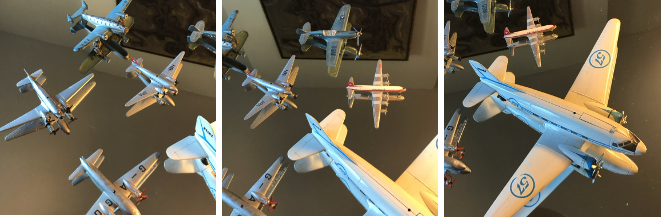
Most of the airplanes in my collection are diecast, dating back to the mid 1940s when they were produced by Hubley, Tootsietoy, Dinky Toys, with Corgi, Matchbox, and Manoil for miniature cars and soldiers. Many in my collection are vintage, while others are modern and even contemporary replicas of iconic aircraft.
Hubley aircraft No. 1
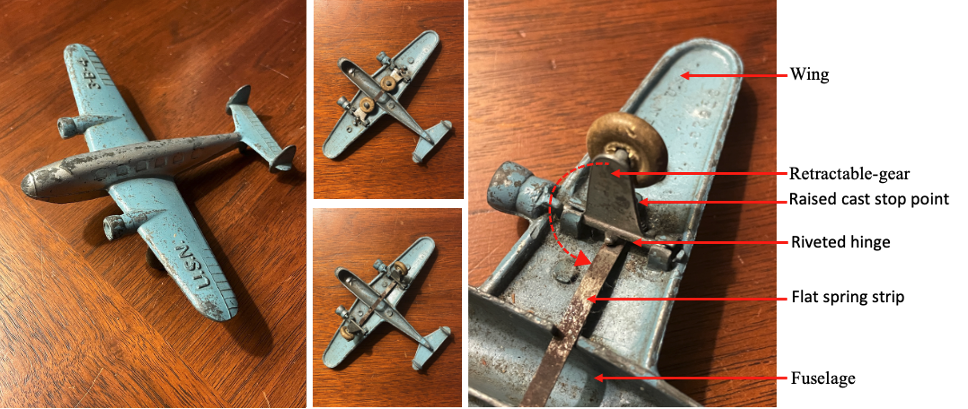
This pre-WWII diecast toy airliner was produced by Hubley, who was a major American producer of cast-iron toys through the 1950s. The twin engine transport aircraft—given the size may well represent what was called a “feeder airliner”—is made of zinc alloy (commonly called pot metal) and cast from two interlocking halves.
The simple construction is revealed by the thin seam between the top fuselage and propellor engine, and the bottom fuselage with its back twin tail fins and rudders (the original propellors are missing). There is no plastic in this model (and none in the following examples), and the wings and entire under-carriage are painted in a muted blue. The left wing has an embossed marking U.S.N. (U.S. Navy theme), while the right wing features 3-B-4 as the numeric pattern for the manufacturer’s catalog. Both markings were used by Hubley during the pre-WWII and wartime years. This toy is not a replica of a particular aircraft, although its 12 cabin windows are similar to the later Lockheed Electra aircraft.
A clever feature that I very much appreciate in this toy is the ability to move both wheels with a simple retractable-gear system. The wheels are mounted on a steel strut that pivots up and down on a riveted strip spanning under both wings providing the necessary tension mechanism to snap or unlock the wheels. A child could imagine the airplane on the ground, or in combat with the wheels retracted under the wings (Image 2, far right).
As mentioned in my introduction, this particular toy was marketed as “airplanes for boys”, built for durability with a hard thick gage to resist a boy’s hard combat play!
Dimensions: 4 x 5¼ inch, tall 1¼ inch
Hubley aircraft No. 2
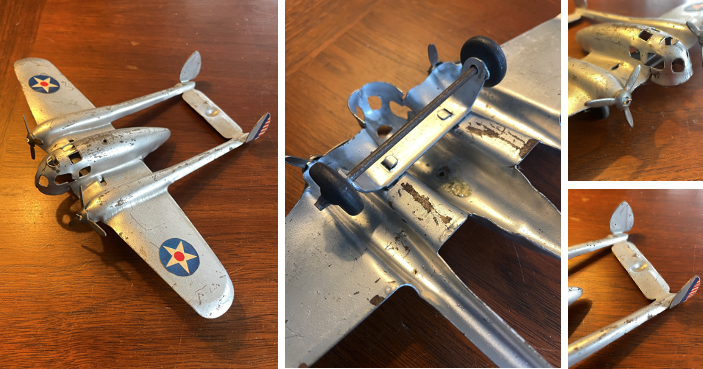
This toy airplane has two particularities. First, that it resembled the Lockheed P-38 Lighting and the DH Comet (the latter became the prototype for the de Havilland COMET, see below), which were both in operation during WWII. However, this model’s main fuselage is bulkier and continuous, but the recognizable twin tail booms and propellers are almost identical to the actual aircraft. Second, looking at the undercarriage of the model, one can appreciate that the entire toy was diecast out of a single sheet of metal. The only objects affixed to the main body are the wheel mechanism, propellors, and wing and strut decals. I am fortunate that after many years of previous owners, both peened propellors and decals are in very good condition.
Again, like many military toy airplanes, one finds decals. In this case, two US Army Air Corps roundels on the end of each wing. Of note, the decals on the wings point to the toy being manufactured prior to 1942. These were later removed due to the resemblance to the red dot on the Japanese flag. While there are no visible manufacturing markings, research points towards it being a Hubley toy.
Dimensions: wing span 8½ x 5 ¾ inch, tall 1 ½ inch
Tootsietoy aircraft No. 1
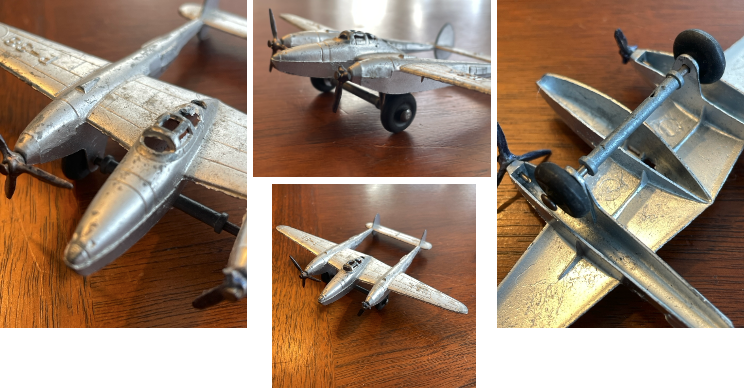
Manufactured in the United States, this toy is a replica of the military Lockheed P-38 Lighting aircraft (embossed on the right wing), which is similar in shape to the above example (Image 3). Aluminum diecast produced from the late 1930s through the early 1940s—prior to being curtailed due to wartime restrictions on zinc and aluminum—this toy has realistic details. It is lightweight compared to pot-metal airplanes (Image 2) and has a distinctive casting of three interlocking parts, with the third piece placed underneath the cockpit.
The seams between the three pieces are cleverly designed to be unnoticeable. However, looking closely, one sees the undercarriage formed by the twin booms that connect the fuselage with the tail assembly (rudders and horizontal stabilizers). Two roundels at the tip of each front wing do not have the pre-1942 decals. Thus, the indication that this toy may have been produced after 1942.
Compared to the first aircraft featured in this blog (Image 2), this toy has rubber wheels that are fixed rather than being retractable. The toy seems to have been sprayed silver, based on the very minor pitting on the left wing tip. A disappointment is that the right propellor is damaged.
Dimensions: wingspan 5¼ x 3 ¾, tall 1 inch
Dinky Supertoys aircraft No. 1
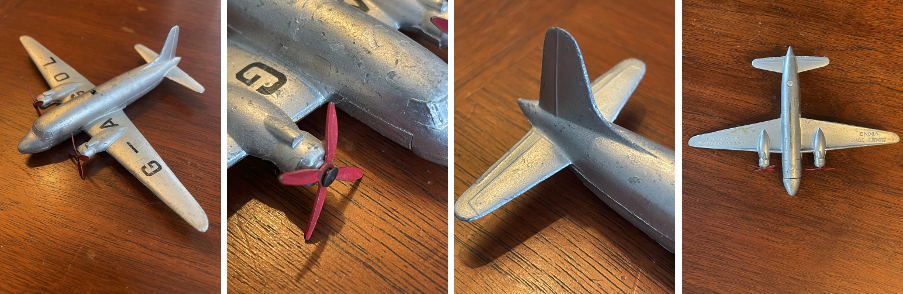
The first Dinky toy in my collection of three, is a replica of the Vickers Viking Airliner flown through the 1950s by British European Airways (BEA). Considered a classic in airplane toys, the actual airplane operated as a short-range airliner featuring twin-engine propellors. This replica dates to the early post-war period based on the silver paint, lack of window details, red 3-blade propellors (distinctive color for early Dinky toys), and the decals letters “G-A…” on the wings, that stand for the prefix British civil registration. I am delighted that both propellors are intact.
Made of two pieces like most Dinky Toys, this airplane is cast in Zamak or Zamac (acronym derived from the German words for its components: Zink, Aluminum, Magnesium, and Kupfer), a zinc alloy that is easy to cast, and gives weight, strength, and durability to an object, particularly toys.
Of note, there are no wheels, showing the aircraft as if it was in motion in the sky.
Dimensions: wingspan 5½ x 3¾, tall 1¼ inch
Dinky Supertoys aircraft No. 2
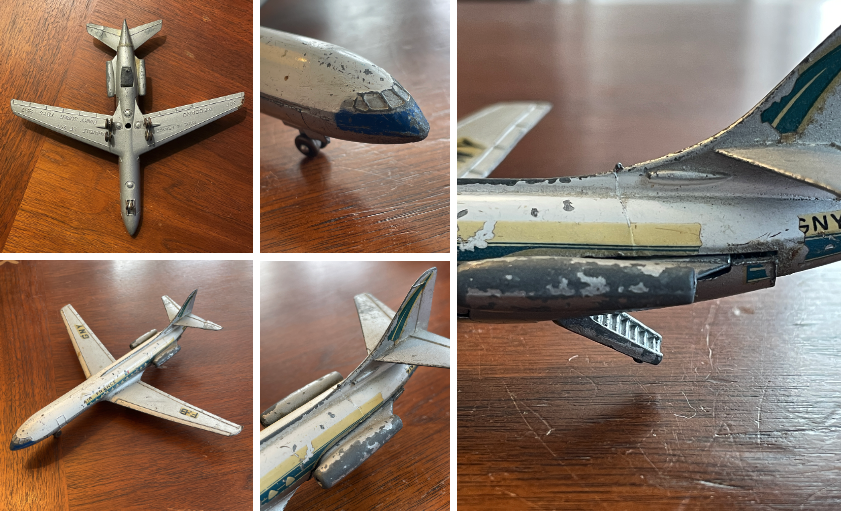
Produced in the mid to late 1960s by British Meccano Ltd. (Dinky Toys), this plane is a replica of the short-range Caravelle aircraft introduced in 1956 for commercial use by Scandinavian SAS and later for French Sud Aviation. It is not only decorated in the colors of Air France but remains one of the most iconic French airplanes of that period. Its distinctive features are its two rear-mounted engines with a rear retractable airstair. Prior to McDonnell Douglas adopting these characteristics into what became known as the DC-9, the Sud Aviation Caravelle SE-110 was known as the first short-haul successful aircraft operating in the jet age. I remember taking a Swissair DC-9 between Vienna and Zürich in September 1969 marveling as a young boy as I stepped up on the rear staircase.
The decorative horizontal decal band of color (also called the cheatline pattern in real airplanes) was applied along the fuselage (in our case featuring the windows, the Air France logo and the French flag). The pattern is not fully intact, but nevertheless reveals an important design feature that I very much like. The windows are not square (as they are in the next example) nor vertically oblong as in today’s aircraft, but are a distinctive curved triangular shape (Image 6 middle below). I remember my architecture professor Robert Slutzky talking about the geometry of these windows, specifically as they related to function during an era where commercial flying was fueled by optimism. Of note, I have the book titled Aircraft written by Le Corbusier and published in 1935. A very fine study of the architect’s interest in aircrafts with a short essay featured with the above link.
Beyond that the windows improve structural stress, they were designed to reduce glare from the sun at the narrow top of the triangle for passenger comfort, while offering the triangular wide base with ample downward view of the earth’s scenery. What an elegant industrial design feature that has disappeared in today’s accepted understanding that flying is no longer magical and often not part of an aesthetic experience.
Similar to the previous two toys, this airplane is fabricated in several pieces, but is made from Mazak, a strong metal alloy made from inexpensive zinc alloys that offer ease of casting, giving the toy a wonderful weight, and honest durable playwear. The landing gears are not retractable, and the wheels are made from black rubber.
Dimensions: wingspan 7 x 6 ¾, tall 2 inches
Dinky Supertoys aircraft No. 3
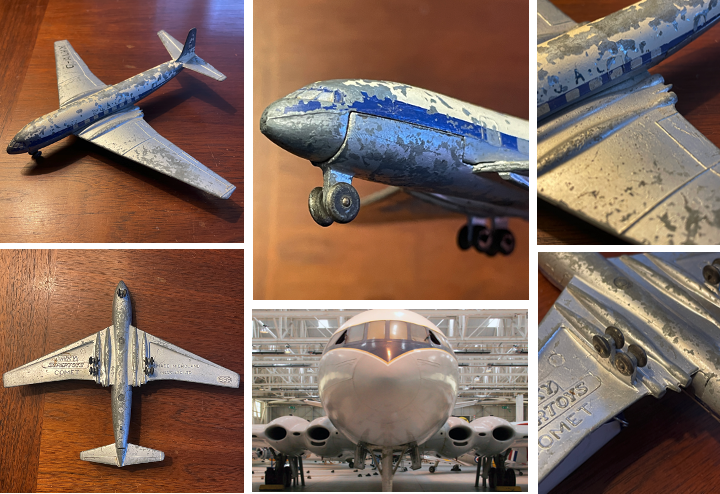
This toy is a replica of the first British commercial jet aircraft, the de Havilland COMET, that was launched in 1946 and flown commercially early 1952. The name de Havilland comes from the advanced aerodynamic four Ghost turbojet-powered engines created by de Havilland Aviation Company, which were set as twins buried on either side under the wing roots (where wings meet the fuselage). The jet age made flying a novel experience by being smoother and quieter compared to the previous piston-engined propeller-driven airliners.
The pressurized cabin held four passenger seats per row and was designed for transatlantic voyages, and the Ghost engines allowed the aircraft to fly above weather, which was innovative for its time. Entrances into the cabin were provided by a front left and rear right doors. A pair of four-wheel bogie are set under the main undercarriage units.
The square windows (Image 7 middle top) on the British Overseas Airways Corporation (BOAC) airplane seems innovative, but was rapidly replaced with triangular windows as square windows provided unnecessary stress points at the intersection of window and fuselage. In fact, one of the moves from square to triangular window was a direct result of one of the findings after the crash of a de Havilland COMET due to metal fatigue triggering the fuselage to rip apart around the windows. This toy features 8 windows, thus a 32 seat configuration with a central aisle, which features the improved version of the original de Havilland COMET.
Dimensions: wingspan 7¼ x 5 ¾, tall 1½ inch
Conclusion
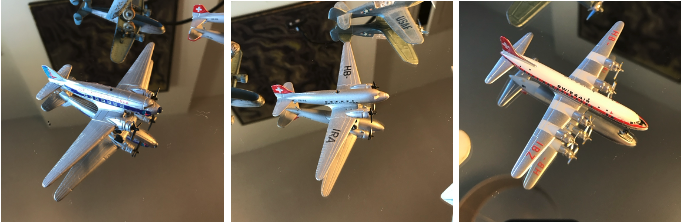
There is so much to learn about aircrafts and the delight in researching this collection has offered me a new perspective on how much toys made every effort to be faithful to the existing aircraft flying around the world in the early days of commercial aviation. Not only do they have the patina of my youth, but these toys carried meaning and were made to last. No plastic, just innovative materials that gave such pleasure to play with.
Additional blogs on the author’s various collections
- Antique primitive sideboards
- Miniature diecast airplanes
- About watches and their typefaces
- Swiss white wine glasses
- A compass set
- Harrods mid-century cocktail cabinet
- Lower deck lavatory: A340-600
- Mortician embalming cooling table
- Urban Posters in Paris, France
- Overnight sleeper train
- Post office Box Cabinet
- Secretaire a abattant
- Tri-fold mirror
- Vintage New York Postcards: Part 1
- Vintage New York Postcards: Part 2
- About miniature metal buildings
- New York vintage traffic signals